Fruiting body vs mycelium: what's in your mushroom supplement
Published · Updated · 3 min read
In this article
What's the difference?
A mushroom is only the visible part of a much bigger organism. Underground, or inside wood, the fungus grows as mycelium: a web of fine white threads. When conditions are right, it produces a fruiting body, the mushroom, to release spores. Think of an apple tree: the mycelium is the tree, and the fruiting body is the apple.
| Fruiting body | Mycelium | |
|---|---|---|
| What it is | the mushroom itself | the root-like threads |
| How it’s grown for supplements | on logs, sawdust or substrate blocks, then harvested and dried | usually on grain (rice, oats) in bags or jars, or in liquid tanks |
| Time to grow | longer | shorter, so cheaper |
| Eaten as food? | yes, for centuries | not traditionally |
| Used in the human Lion’s Mane studies we’ve checked? | yes, in two of three (the third doesn’t say) | not stated in any |
Why it matters: the grain question
Mycelium grown on grain can’t easily be separated from it. When the whole lot is dried and ground (“myceliated grain” or “mycelium on grain”), a large share of the powder can be the grain itself, which is mostly starch. Labs can tell the difference: a standard test measures beta-glucans (the polysaccharides mushrooms are known for) separately from alpha-glucans (starch). Fruiting body products tend to have more beta-glucans and little starch; grain-grown mycelium products often show the reverse.
Mycelium isn’t automatically bad. Mycelium grown in liquid tanks without grain can be a clean ingredient. The problem is products that don’t say what they are.
What a 2026 test of 30 products found
In 2026, Mycogenius, working with Shannon ABC at the Technological University of the Shannon, published lab results for 30 Lion’s Mane extracts. Beta-glucan content ranged from under 5% to 82%, and the hericenones C and D that many labels mention weren’t found in any meaningful amount in any of them. Products with the same name and similar labels were not the same thing inside the bottle.
How to read a label
- Look for “fruiting body” or “mycelium”. If neither is stated, ask the seller.
- Look for “grown on” or “myceliated grain”. That tells you the grain is in it.
- Check the amount per daily dose, not a big number for the whole pack.
- Look for a lab report. Ideally beta-glucans as well as heavy metals and microbes.
What's in our bottles
| Product | What it’s made from |
|---|---|
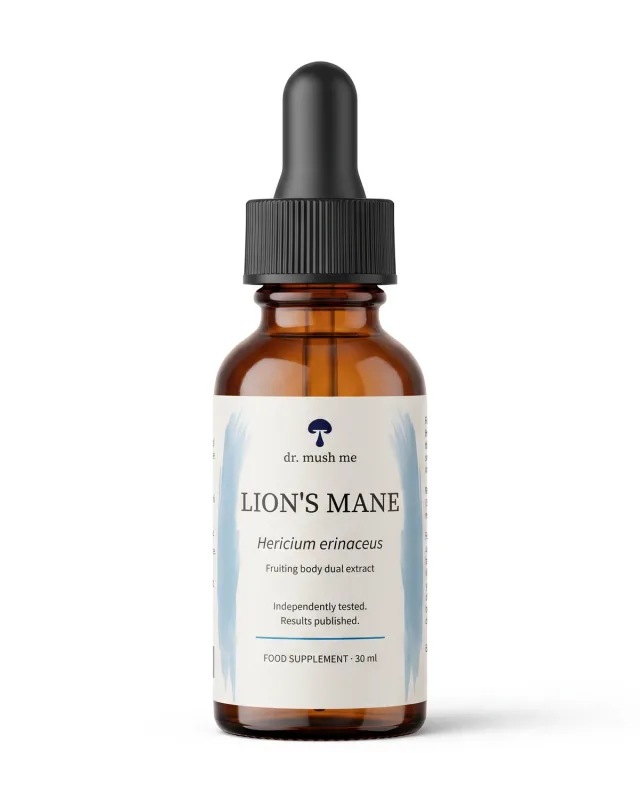
| Lion’s Mane drops | Lion’s Mane fruiting body |
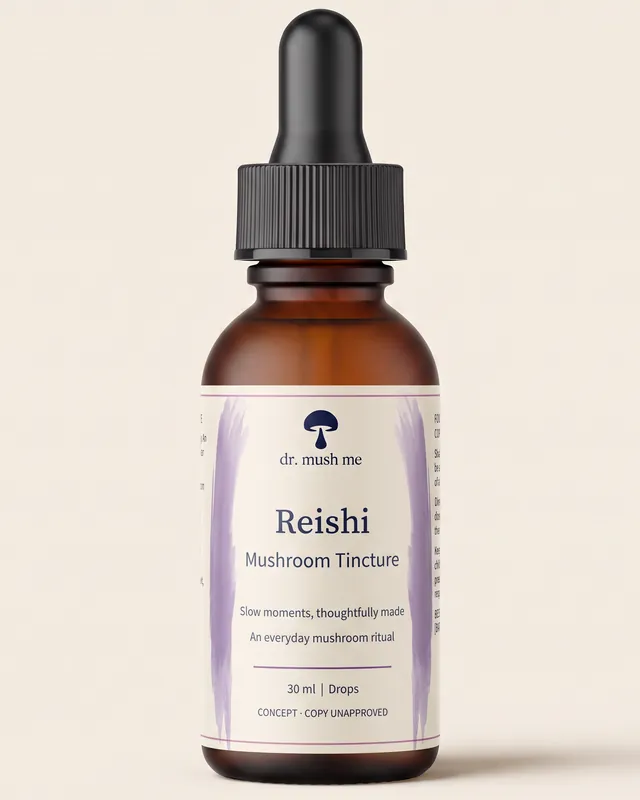
| Reishi drops | Reishi fruiting body |
| Chaga drops | chaga, the dark growth found on birch trees |
| Cordyceps drops | cultivated Cordyceps sinensis |
All four are extracted in water and food-grade alcohol, with no grain, fillers or other ingredients, and tested by an independent lab, J.S. Hamilton Poland, for heavy metals and microbes. The reports are on each product page.
Questions people ask
Is mycelium a scam?
No. It’s a real part of the fungus. The issue is labelling: grain-grown mycelium sold without saying so.
Is fruiting body always better?
Not automatically. A badly made fruiting body product can be weak too. That’s why the lab report matters more than the word on the front.
Does it matter for Lion's Mane specifically?
Two of the three human Lion’s Mane studies we’ve checked used dried fruiting body; the third doesn’t say which part. See our Lion’s Mane dosage guide.
What about cordyceps?
Wild Cordyceps sinensis fruiting bodies are rare and very expensive, so cordyceps supplements are cultivated. See how cordyceps is farmed.
Sources
- NutraIngredients. Mycogenius talks tackling the mushroom supplement transparency challenge (May 2026). nutraingredients.com
- Product specifications and J.S. Hamilton Poland lab reports for our drops.
This article is general information, not medical advice. If you take any medication, talk to your GP or pharmacist before taking any supplement.
Every extract we make is from the fruiting body, and the lab report for each one is on its page: see Lion's Mane Ireland.
This article is general information, not medical advice. If you have a health condition or take medication, talk to your GP or pharmacist first. Food supplements should not be used as a substitute for a varied, balanced diet and a healthy lifestyle. Do not exceed the recommended daily dose. Not suitable for children, or during pregnancy or breastfeeding. Keep out of reach of children.