Cordyceps and nerve damage: what the research shows
Published · Updated · 2 min read
In this article
What does the research on cordyceps and nerves show?
Very little, and none of it in people. The clearest study is from Taiwan, published in 2022:
- Who: adult rats, not people.
- What: an extract of Cordyceps cicadae mycelium, a different species from the cordyceps usually sold as a supplement, given by mouth at 100 mg per kg of body weight for 7 days before the optic nerve (the nerve behind the eye) was deliberately crushed.
- What they measured: how many nerve cells in the retina survived, and how the eye responded to light, two weeks later.
- What they found: more nerve cells survived in the rats given the extract, with less inflammation around the nerve.
Three things stop that result applying to you. It was in rats. It was a different species of cordyceps. And the extract was given before a sudden injury, which isn’t how nerve damage happens for most people. There are also lab studies on cordycepin, one of cordyceps’ compounds, and nerve cells, but those are in dishes, not bodies.
What causes nerve damage?
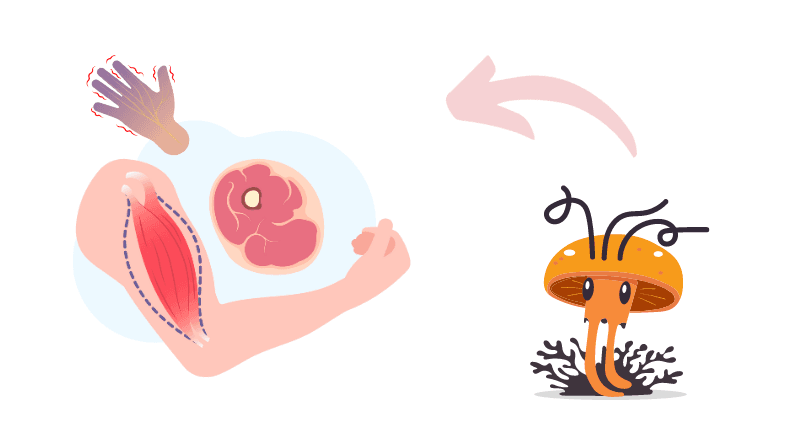
Nerve damage (neuropathy) usually affects the nerves in the hands and feet first. Common causes include:
- diabetes, the most common cause
- low vitamin B12 or other vitamin deficiencies
- heavy drinking over a long time
- injuries, or a nerve being trapped or compressed
- some medicines, including some chemotherapy
- infections and autoimmune conditions
Symptoms depend on which nerves are affected:
- Sensory nerves: numbness, tingling, pins and needles, burning pain, or not feeling hot and cold properly.
- Motor nerves: weakness, cramps, or trouble with movement.
- Autonomic nerves: problems with digestion, bladder or blood pressure.
Because some causes, like diabetes or low B12, are treatable and get worse if they’re missed, it’s worth getting symptoms checked rather than trying a supplement first.
Is cordyceps safe if I have nerve damage?
Cordyceps can interact with some medicines, including blood thinners, diabetes medicines and medicines that suppress the immune system. Several of those are common in people with neuropathy, especially if it’s linked to diabetes. Check with your GP or pharmacist before you start.
Other things to know:
- If you’re allergic to moulds or fungi, you may react to cordyceps.
- If you have an autoimmune condition, check with your GP first.
- There isn’t enough research on cordyceps in pregnancy or breastfeeding, so avoid it then.
Questions people ask
Can cordyceps regenerate nerves?
That hasn’t been shown in people. The animal study above looked at nerve cells surviving an injury, not nerves regrowing.
Is Lion's Mane better for nerves than cordyceps?
Lion’s Mane is the mushroom more often asked about for nerves, but its research on nerves is also mainly in cells and animals. Neither has been shown to repair nerve damage in people.
Can I take cordyceps alongside my nerve pain medication?
Ask your pharmacist. They can check your specific medicines.
Related: cordyceps and dopamine · cordyceps and alcohol · our cordyceps drops
Sources
- Wen YT, et al. Neuroprotective effects of Cordyceps cicadae mycelium extract in the rat model of optic nerve crush. Int J Med Mushrooms 2022. PubMed 35446521
- WebMD. Cordyceps: interactions. webmd.com
This article is general information, not medical advice. If you take any medication, talk to your GP or pharmacist before taking any supplement.
This article is general information, not medical advice. If you have a health condition or take medication, talk to your GP or pharmacist first. Food supplements should not be used as a substitute for a varied, balanced diet and a healthy lifestyle. Do not exceed the recommended daily dose. Not suitable for children, or during pregnancy or breastfeeding. Keep out of reach of children.